
Between the 1890s and the 1930s, a small group of Golden Age golf architects changed the game forever. Until then, the best golf was played by the sea. These architects showed that great courses could be built inland too, on the sandy heaths around London, the moors of Yorkshire and beyond.
This was the Golden Age of golf course design, and England was at the heart of it. Many of the courses built in those years are still among the finest in the world, and almost all of them welcome visitors. Here are the Golden Age golf architects behind them, and where you can play their work.
By Golf Tourism England · Last updated 26 October 2026
The Golden Age golf architects at a glance
| Architect | Years | Known for | Play his work at |
|---|---|---|---|
| Old Tom Morris | 1821–1908 | Four-time Open champion and the forerunner | Royal North Devon |
| Willie Park Jr | 1864–1925 | Proving heathland could host great golf | Sunningdale Old |
| Harry Colt | 1869–1951 | More than 300 courses worldwide | Swinley Forest |
| Herbert Fowler | 1856–1941 | Walton Heath, his first design, in his forties | Walton Heath |
| J.F. Abercromby | 1861–1935 | Bold heathland courses around London | Worplesdon |
| James Braid | 1870–1950 | Five Open wins and over 200 courses | St Enodoc |
| J.H. Taylor | 1871–1963 | Five Open wins and first chairman of the PGA | Hindhead |
| Alister MacKenzie | 1870–1934 | Camouflage-inspired design, later Augusta National | Alwoodley |
Jump to: Old Tom Morris · Willie Park Jr · Harry Colt · Herbert Fowler · J.F. Abercromby · James Braid · J.H. Taylor · Alister MacKenzie · FAQs
Old Tom Morris (1821–1908): the forerunner

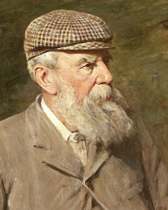
Before the Golden Age came Old Tom Morris, the grand old man of golf. Born in St Andrews, he won the Open Championship four times in the 1860s and spent his life laying out and caring for courses.
He worked mostly with the land as he found it, routing holes through natural dunes and hollows. His work in England helped spread golf south of the border, and it set the stage for the architects who followed. Read more about Old Tom Morris.
Play his work in England:
- Royal North Devon, Westward Ho! (South West), England’s oldest links, later revised by Herbert Fowler
- Wallasey, Merseyside (North West)
- Royal Cromer, Norfolk (East Anglia), later revised by James Braid
- West Herts, Hertfordshire (London & the Home Counties), later revised by Alister MacKenzie
- Cleveland, Redcar (Yorkshire), later revised by Harry Colt
Willie Park Jr (1864–1925): the heathland pioneer
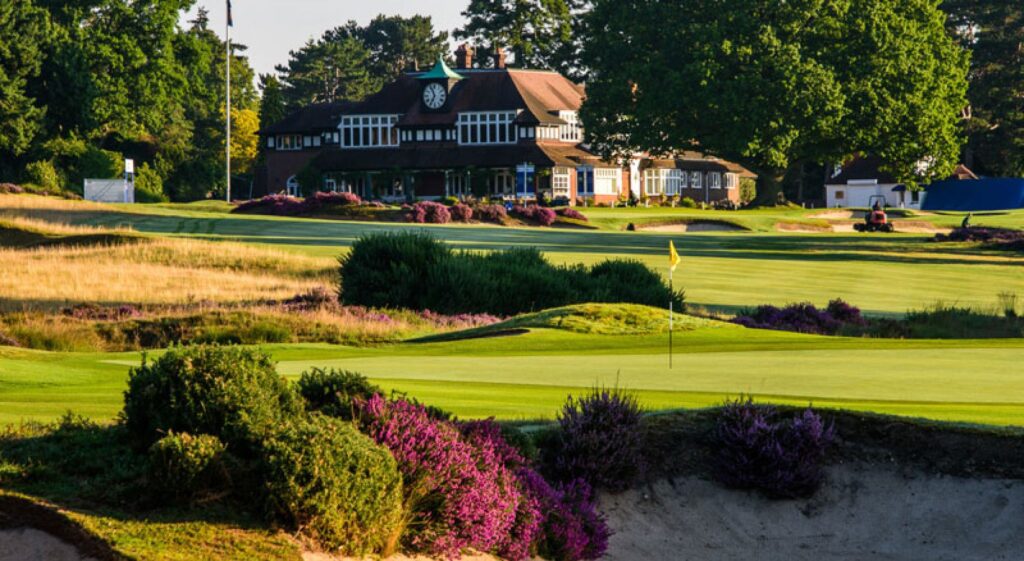
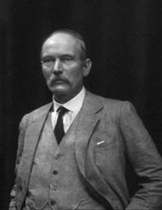
Willie Park Jr was a Scottish professional from Musselburgh who won the Open Championship in 1887 and 1889. He was famous for his putting, and he went on to become one of the first full-time golf course architects, with around 170 designs.
His great breakthrough came at Sunningdale. Heathland had long been thought unsuitable for golf, but his Old Course proved it could produce a world-class layout. That success opened up the sandy belt around London and helped launch the Golden Age. Read more about Willie Park Jr.
Play his work in England:
- Sunningdale Old, Berkshire (Surrey, Berkshire & Hampshire)
- West Hill, Surrey (Surrey, Berkshire & Hampshire), with Cuthbert Butchart
- Notts (Hollinwell), Nottinghamshire (Midlands)
- Formby, Merseyside (North West), later revised by Harry Colt
- Parkstone, Dorset (South West)
- Stoneham, Hampshire (Surrey, Berkshire & Hampshire)
Harry Colt (1869–1951): the master
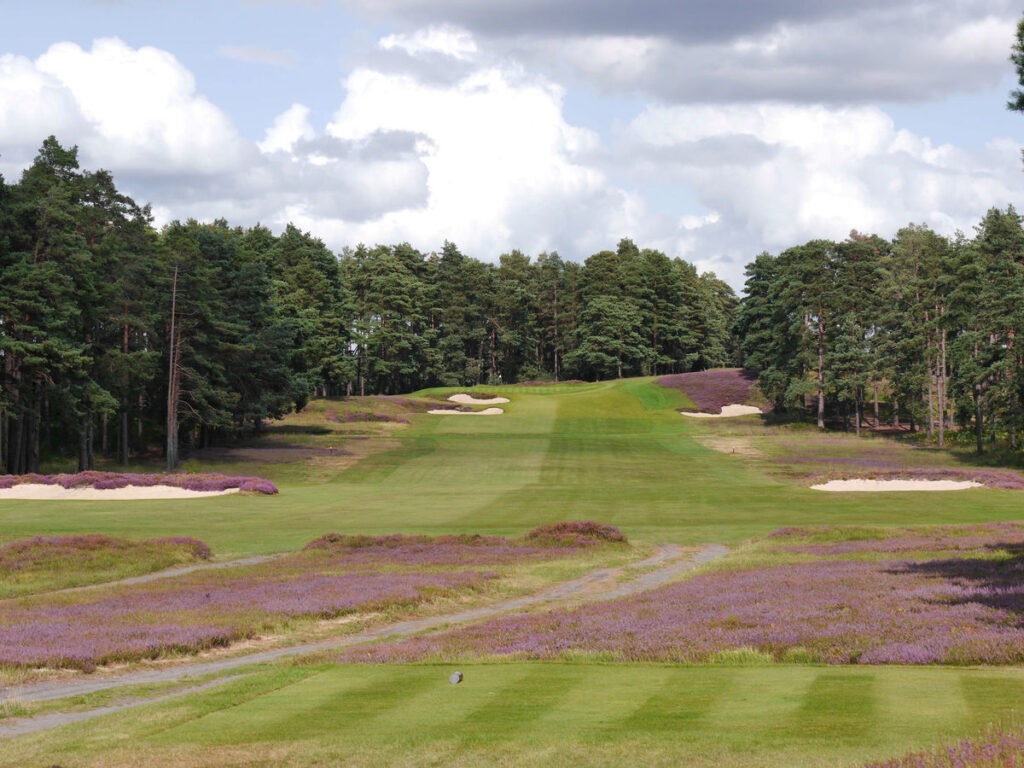
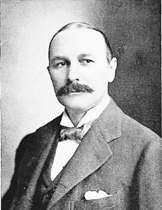
If one name defines the Golden Age, it’s Harry Colt. Born in Highgate, London, he studied law at Cambridge and captained the university golf club before turning to design. He went on to work on more than 300 courses around the world.
Colt was never a professional golfer, and he treated design as a career in its own right. In 1928 he formed a firm with Charles Alison and John Morrison, and he worked with a young Alister MacKenzie. Abroad, his work includes Royal Portrush in Northern Ireland and Pine Valley in the United States, with George Crump. Read more about Harry Colt.
Play his work in England:
- Sunningdale New, Berkshire (Surrey, Berkshire & Hampshire)
- Swinley Forest, Berkshire (Surrey, Berkshire & Hampshire)
- St George’s Hill, Surrey (Surrey, Berkshire & Hampshire)
- Stoke Park, Buckinghamshire (London & the Home Counties)
- Moor Park, Hertfordshire (London & the Home Counties)
- Rye, East Sussex (Kent & Sussex)
- Trevose, Cornwall (South West)
- Royal Lytham & St Annes, Lancashire (North West), revised by Colt
- Royal Liverpool, Hoylake (North West), revised by Colt
- Woodhall Spa (Hotchkin), Lincolnshire (Midlands), revised by Colt
Herbert Fowler (1856–1941): the late starter
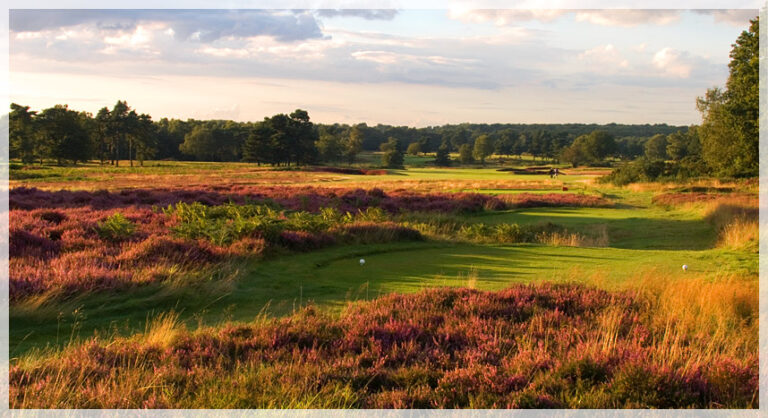
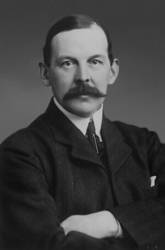
Herbert Fowler was a big-hitting Somerset cricketer before he took up golf. His brother-in-law, Sir Cosmo Bonsor, bought land on Walton Heath in Surrey and gave him the job of designing a course there. Fowler was in his mid-forties, with no design experience, yet Walton Heath opened in 1904 and was an immediate success.
He went on to design and remodel courses on both sides of the Atlantic. In America he famously lengthened the 18th at Pebble Beach, turning it into the great par 5 it is today. Read more about Herbert Fowler.
Play his work in England:
- Walton Heath Old and New, Surrey (Surrey, Berkshire & Hampshire)
- The Berkshire, Red and Blue courses (Surrey, Berkshire & Hampshire)
- Saunton East, North Devon (South West)
- Burnham & Berrow, Somerset (South West)
- Delamere Forest, Cheshire (North West)
- Beau Desert, Staffordshire (Midlands)
J.F. Abercromby (1861–1935): the heathland craftsman
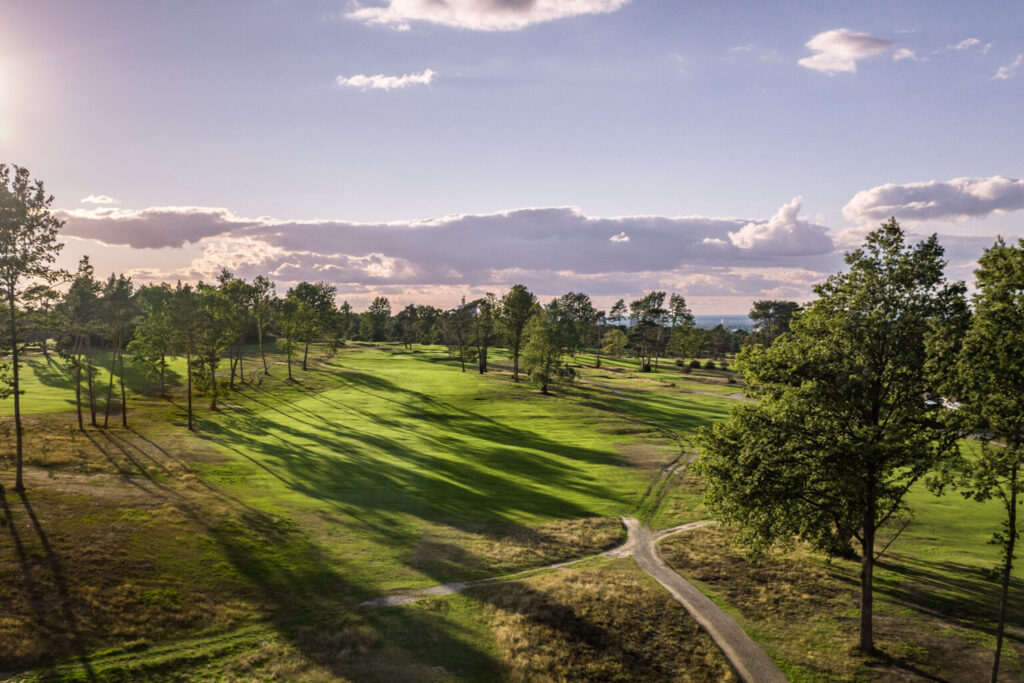
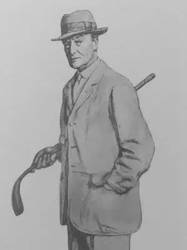
John Frederick Abercromby, known to his friends as “Aber”, was born in Cape Town and worked on the London Stock Exchange before golf took over. Around 1900 he was asked to create a course to rival Walton Heath and Woking, and decided to lay it out himself. The result was Worplesdon, which opened in 1908.
He built far fewer courses than Harry Colt, but they are known for their quality and boldness. He often worked with Herbert Fowler, and he designed The Addington in 1913, where he lived until his death. Read more about J.F. Abercromby.
Play his work in England:
- Worplesdon, Surrey (Surrey, Berkshire & Hampshire)
- Coombe Hill, Kingston upon Thames (London & the Home Counties)
- The Addington, Croydon (Surrey, Berkshire & Hampshire)
- Knole Park, Sevenoaks (Kent & Sussex), with Herbert Fowler
James Braid (1870–1950): the champion designer
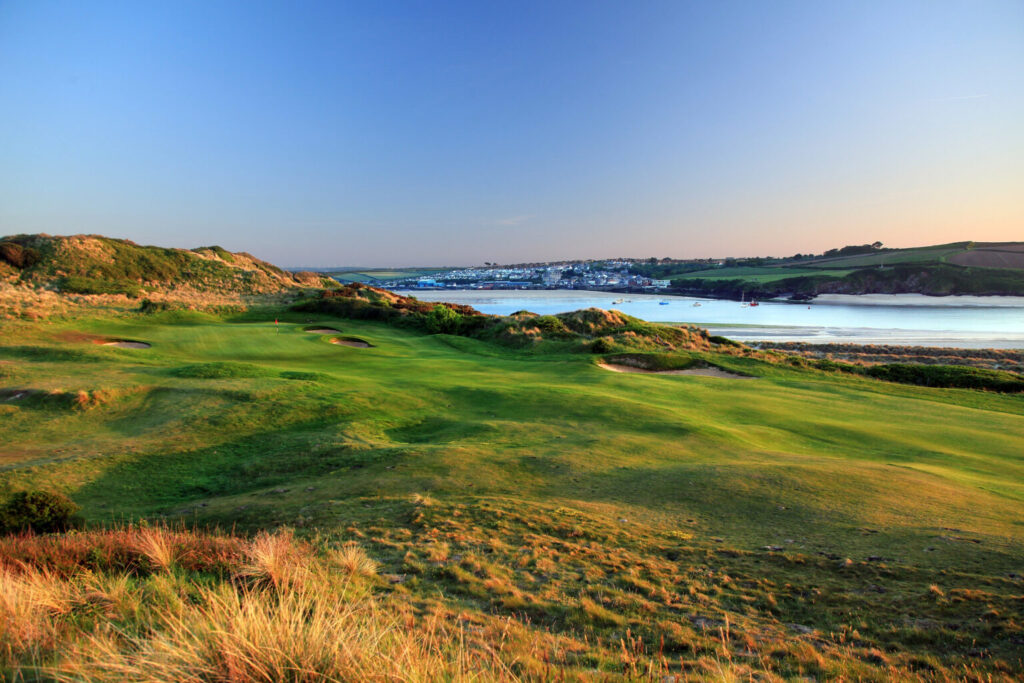
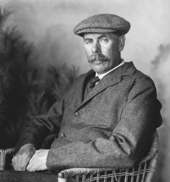
James Braid, from Earlsferry in Fife, won the Open Championship five times between 1901 and 1910. With Harry Vardon and J.H. Taylor he formed the “Great Triumvirate” that dominated golf before the First World War.
Braid was the professional at Walton Heath for many years, and he designed or remodelled well over 200 courses across Britain. His courses are honest and natural, and his work is found all over England, from Cornwall to Northumberland. Read more about James Braid.
Play his work in England:
- St Enodoc (Church), Cornwall (South West)
- Perranporth, Cornwall (South West)
- Hunstanton, Norfolk (East Anglia)
- Southport & Ainsdale, Merseyside (North West), revised by Braid
- Hankley Common, Surrey (Surrey, Berkshire & Hampshire)
- Walmer and Kingsdown, Kent (Kent & Sussex)
- Dunstanburgh Castle, Northumberland (North East)
- Goswick, Northumberland (North East)
J.H. Taylor (1871–1963): the Devon champion

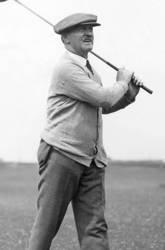
John Henry Taylor was born in Northam, Devon, and started out as a caddie at Royal North Devon at the age of 11. He won the Open Championship five times between 1894 and 1913 and was the third member of the Great Triumvirate.
Taylor helped found the PGA in 1901 and was its first chairman. He spent most of his working life at Royal Mid-Surrey and designed courses across England, including several still loved today. Read more about J.H. Taylor.
Play his work in England:
- York, North Yorkshire (Yorkshire)
- Hindhead, Surrey (Surrey, Berkshire & Hampshire)
- Long Ashton, near Bristol (South West)
- Porters Park, Hertfordshire (London & the Home Counties), revised by Taylor
Good to know: pair a round at Royal North Devon, where his golf began, with a visit to his home village of Northam.
Alister MacKenzie (1870–1934): the camouflage doctor
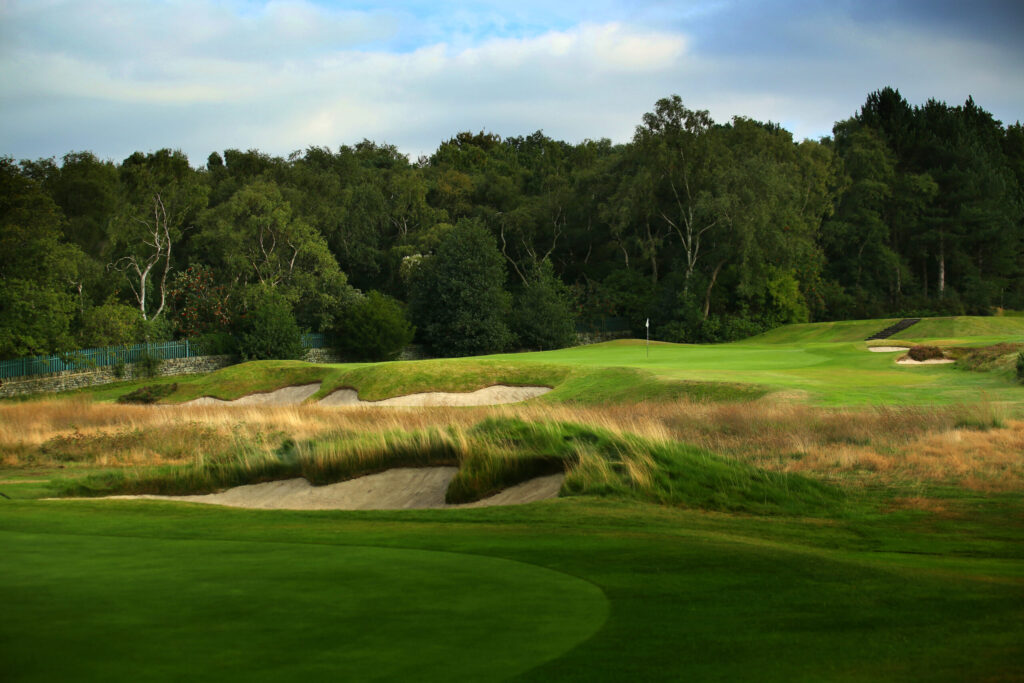
Alister MacKenzie trained as a doctor and surgeon. Serving in the Boer War, he saw how well the Boers used camouflage, and in the First World War he worked as a camouflage expert. He brought that eye to golf, making his courses blend into the natural landscape.
His first course was Alwoodley near Leeds, where he was a founder member in 1907. Harry Colt was asked for a second opinion and largely backed his ideas. MacKenzie went on to design Augusta National, Cypress Point and Royal Melbourne, but his roots are in Yorkshire. Look out for his bold, rolling greens and big, natural-looking bunkers. Read more about Alister MacKenzie.
Play his work in England:
- Alwoodley, Leeds (Yorkshire)
- Moortown, Leeds (Yorkshire)
- Sand Moor, Leeds (Yorkshire)
- Ilkley (Yorkshire), with Harry Colt
- Cavendish, Derbyshire (Midlands)
- Teignmouth, Devon (South West)
- Hadley Wood, Hertfordshire (London & the Home Counties)
Also worth knowing
Want to know more about the ground these architects worked with? Read our guide to the types of golf in England.